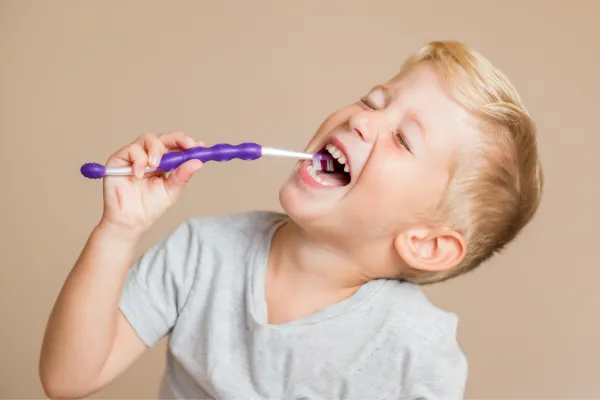
Why I Choose Fluoride-Free Toothpaste for My Kids
This article contains affiliate links, which means I earn a small commission if you purchase, at no extra cost to you. I only recommend products I genuinely use and trust!
You're standing in the toothpaste aisle, reading labels for the third time, and you still can't decide. Fluoride or fluoride-free? Your pediatrician says one thing, your holistic mom friends say another, and Google has made you more confused than ever.
I get it - because I've been there too. I'm a dentist who chose fluoride-free toothpaste for my own kids after years of recommending my own patients use fluoride to prevent tooth decay.
Let me explain why, what the research actually says, and which specific product I keep stocked in our bathroom (and now recommend to my patients' parents who want a natural option).
The Fluoride Dilemma
"Dr. Molly, is fluoride actually safe?"
It's a tricky answer, in my opinion. Here's what I would tell you if we were chatting over coffee while our toddlers play nearby: fluoride isn't the villain, but it's also not the only hero in cavity prevention.
The biggest factor in childhood cavities isn't whether you use fluoride or not - it's frequency of snacking, mouth-breathing versus nasal breathing, consistency of brushing, diet, and using a toothpaste with proven cavity-fighting ingredients.
The research shows fluoride works. But here's what the studies don't always mention: xylitol-based toothpastes can be just as effective when used correctly, without the concerns some parents have about fluoride ingestion in young children.
Why I Made the Switch for My Own Family
After my daughter turned two, I started really looking at what we were using. She was swallowing about half of her toothpaste (totally normal for toddlers), and I kept reading about fluorosis - those white spots that can appear on permanent teeth from too much fluoride during tooth development.
Ummm hello... I have those on my front teeth, and they made me so self-conscious as a kid!
And that's the moment I realized that I wasn't anti-fluoride. I was pro-making-an-informed-choice-for-my-family.
A couple of years ago, I did a deep discovery on xylitol - a natural sugar alcohol that literally starves the bacteria that cause cavities. I'd been reading about the benefits of xylitol gum and mints for years, but I hadn't found a kids toothpaste that used xylitol as the primary active ingredient until I tried Zebra.

What Actually Prevents Cavities (It's Not What You Think)
Let's get nerdy for a second, because this changed how I think about toothpaste entirely.
Cavities form when:
Bad bacteria in the mouth eat sugar
They produce acid as waste
That acid eats away at tooth enamel
A cavity forms
Fluoride works by: Making enamel harder and more acid-resistant
Xylitol works by: Starving the bacteria so they can't produce acid in the first place
Both approaches work. But here's what sold me on xylitol: Studies show it reduces cavity-causing bacteria by up to 90% and the effects last for hours after brushing. That means protection even after your toddler has their inevitable post-brushing snack (so many snacks!).
The Real Reason I Switched to Zebra Toothpaste

I'll be completely honest - I tested probably 15 different fluoride-free toothpastes with my own kids before finding one I actually trusted. I tried hydroxyapatite. I wasn't impressed. And most "natural" toothpastes are basically just expensive flavored paste with zero cavity-fighting power.
Zebra toothpaste is different because:
Xylitol is the first ingredient (not just a token amount listed at the bottom)
My kids actually like the taste of the coconut toothpaste, which means they brush willingly (game-changer)
It's safe to swallow, so I don't panic during the toddler years
When Fluoride DOES Make Sense
I need to be clear about something: I'm not anti-fluoride.
There are absolutely situations where I still recommend fluoride toothpaste:
High cavity risk due to diet, genetics, or special needs
Parents who prefer it (seriously - the best toothpaste is the one you'll actually use consistently)
The beauty of xylitol toothpaste is it gives parents an effective alternative that addresses their concerns while still actively preventing cavities.
What About Hydroxyapatite?
You might have heard about nano-hydroxyapatite (nHA) as another fluoride alternative. It's actually a building block of tooth enamel and can remineralize early decay.
So why did I choose Zebra with xylitol instead?
Two reasons:
The research on xylitol's bacteria-fighting properties is more extensive for kids under 6
Xylitol prevents cavities while also working on gums - I see fewer bleeding gums and inflammation in kids who use it regularly
The Mistake I See Parents Make with Natural Toothpaste
Here's where parents go wrong: They switch to a fluoride-free toothpaste but don't check if it actually contains cavity-fighting ingredients.
Not all "natural" toothpastes are created equal.
I've seen countless tubes that are basically:
Baking soda (abrasive, not protective)
Coconut oil (lovely, but doesn't prevent cavities)
Essential oils (fresh breath, zero cavity prevention)
"Organic" ingredients that sound nice but do nothing
Your child is better off brushing with water than using an ineffective "natural" toothpaste that gives you false security.
How I Use Zebra Toothpaste with My Kids (The Exact Routine)
Ages 0-3:
Rice grain-sized amount (they're swallowing most of it)
Brush twice daily, especially before bed
I do the actual brushing - they "help"
Ages 3-6:
Pea-sized amount
They brush first (building skills), then I do a thorough second brush
We sing the ABC song twice (about 2 minutes)
Still swallowing some, so fluoride-free gives me peace of mind
Ages 6+:
They brush independently with supervision
Could transition to fluoride if desired, but we haven't needed to
Zero cavities so far (and that's with five kids who definitely enjoy snacks)
The Questions Parents Always Ask Me
"Will my dentist be upset if I don't use fluoride?"
A good dentist cares about cavity prevention, period. If you're brushing twice daily with an effective xylitol toothpaste, limiting sugar, and coming for regular checkups, your dentist should be thrilled. If they're not supportive, that's a red flag about their flexibility.
"Is xylitol safe for dogs?"
Great question! Xylitol is toxic to dogs, so you'll need to keep the toothpaste out of reach. Same rule as chocolate - just be mindful.
"How long until I see results?"
Within 2-3 weeks, you might notice less plaque buildup and healthier-looking gums. For cavity prevention, you're looking at 6+ months of consistent use before your dentist notices a difference at checkups.
"What if my kid won't brush at all?"
That's a whole different issue! Toothpaste choice doesn't matter if you're battling them every night. [My video course covers brushing battles] - it's one of the most common struggles I help parents solve.
My Bottom Line as Both a Dentist and a Mom
I chose Zebra toothpaste for my kids because the research supports xylitol's effectiveness, I've seen great results in patients, and it lets me sleep well knowing my toddler isn't ingesting fluoride twice daily.
Does that mean fluoride is bad? Absolutely not.
Does it mean there's finally a truly effective alternative that gives parents options? Yes.
The best toothpaste for your child is:
One with proven cavity-fighting ingredients
One they'll actually tolerate using
One you'll use consistently, twice a day
For my family, that's Zebra. And if you want my complete cavity prevention system (diet, habits, brushing techniques, and when to actually worry), check out my [Zero Cavities, Zero Braces course].
What toothpaste are you currently using for your kids? Drop a comment - I read every single one and love hearing what's working for other families!
Frequently Asked Questions
Is fluoride-free toothpaste effective for preventing cavities?
Yes, when it contains active ingredients like xylitol (20%+ concentration) or nano-hydroxyapatite. These ingredients have been shown in research to prevent cavities through different mechanisms than fluoride. The key is choosing a fluoride-free toothpaste with proven cavity-fighting ingredients, not just "natural" fillers.
At what age can kids start using xylitol toothpaste?
Xylitol toothpaste is safe from the very first tooth (around 6 months). Because it's safe to swallow, it's actually ideal for babies and toddlers who can't spit yet. Use a rice grain-sized amount until age 3, then transition to a pea-sized amount.
How much xylitol should be in kids' toothpaste?
Research shows that 20-25% xylitol concentration is most effective for cavity prevention. Check the ingredients list - xylitol should be one of the first three ingredients listed. Many "natural" toothpastes contain only trace amounts that won't provide protective benefits.
Can I switch back and forth between fluoride and fluoride-free toothpaste?
Yes, you can alternate if desired, though consistency with one approach is generally better for tracking effectiveness. Some families use fluoride-free daily and fluoride toothpaste occasionally for extra protection. Discuss your specific situation with your pediatric dentist.
Why do some dentists still only recommend fluoride toothpaste?
Fluoride has decades of research and has been the gold standard for cavity prevention. Many dentists aren't yet familiar with the newer research on xylitol and nano-hydroxyapatite. The research on alternatives is strong but more recent, so some practitioners stick with what they learned in dental school.
